The Free City of Dolom
The bustling crowds of people down by the docks; the sprawling markets of traders, selling wares from all over the known world. A cacophony of voices that, despite their differences, have gathered in this place. This is my home. This is Dolom.
— The words of a traveller met on the road, recorded by the historian Palam
The Free City of Dolom is a wealthy and independent city-state, located on the Western coast of the Inner Sea. Known worldwide as an influential trading hub, it maintains its position as a vulnerable but powerful political entity.
History
Dolom has long since been a rich city: well-placed on the coast to facilitate trade between North and South. In the year 522 (around 600 years ago), with the authority of the Tharenan Empire waning, the founding delegation of Dolom were able to negotiate the city's autonomy. Over the centuries since, Dolom has solidified itself as an independent city-state, expanding diplomatic agreements.
Dolom, while allying with larger powers, retains its existence as a largely independent hub of traders and diplomats to the current day. If someone wants to exchange goods with someone in a rival region, then they'll do it through the Dolom Market.
Now that the Labyrinth has re-emerged, it presents opportunity and uncertainty for the city. While there is much opal1) to be made trading the rare goods of the Labyrinth, the shifting balance of power brings uncertainty surrounding Dolom's continued independence.
Governance
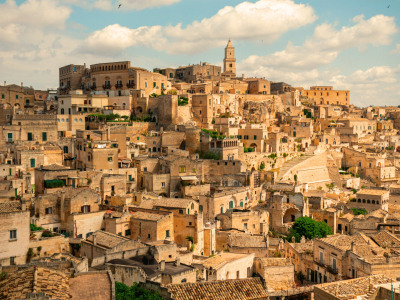
Dolom is governed by a council of twenty delegates, responsible for legislative, fiscal, and executive decisions. Appointment as a delegate is typically a lifetime position, although delegates can resign or be removed from the position by the others. When a role is vacant, the remaining delegates can appoint a new one from the citizenry. In theory, any free citizen of Dolom can be selected. In practice, individuals of high renown are chosen: influential community figures, wealthy benefactors, skilled craftspeople, distinguished military commanders. Amongst the delegates, one is chosen to act as chief delegate on a four year basis. This person is responsible for acting as the face of the delegation and the deciding vote on split decisions.
At the local level, the city service is responsible for enacting and upholding the laws of Dolom. This encompasses many different positions, some appointed, some elected by the citizenry, but all existing to maintain the city. Ultimately, all these positions report back to the delegation.
Society and Culture
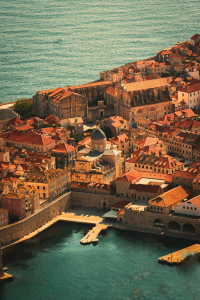 As a city state sandwiched between empires, Dolom has always been in a vulnerable position. Through soft power diplomacy and a well-trained (if small) military force, it has been able to maintain this independence. Confidence in trade is critical to the city's prosperity as a trading hub, and the city service works to continue this confidence.
Service is a key tenet of Dolom. Not all residents of Dolom are citizens, but many of the legal protections and powers of the city are only afforded to citizens. Citizenship can be attained through two years of service to the city: typically attending to the administration or maintenance of the trade houses, working in hospitals, or serving in the military. For those who live there permanently, patriotic sentiments are particularly common. Culturally, people are expected to provide for the city, but equally expect the city to provide for people. Adherents of many different religious beliefs are found throughout the city, often shaped by the travellers coming through.
Within Dolom, artifice is a well-developed magical study. Magically-inclined artisans and crafters utilise the Path of the Hammer to produce and hone specialised tools for their work, enabling ornate objects to be made for sale that cannot be found anywhere else. Alchemy is studied, to a much lesser extent, by mages practicing the Path of the Crucible, in search of valuable elixirs and chemicals.
Characters from Dolom
Starting Point: Unless they are just passing through, all characters from Dolom will have served the city at some point: what form did that take? Is it ongoing? Characters from Dolom are also unlikely to have faced institutional neglect: just as the citizenship serves the city, so too does the city serve the citizenship. As a result, characters from Dolom are likely to have positive and patriotic views of their home, regardless of social standing.
In the world: characters from Dolom are more likely to be seen as diplomatically “neutral”. With no strong alliances but no bitter rivalries, other nationalities are more likely to cooperate with people from Dolom than people from other places.
Character Options: Characters of any species (except Slimefolk) can be found in Dolom at all levels in the social hierarchy. All magical Paths are practiced to some extent, but the Paths of the Hammer and Crucible are more likely to be learned, especially among craftspeople and traders. Those who have served in the well-trained Dolom military are likely to have acquired combat or survival skills, but other citizens are likely to have diplomatic, craft, or scholarly expertise.
| Status Rank | Title | Position in Society |
|---|---|---|
| 1 | Outsider | Not a long-term resident of Dolom, likely just passing through for business. |
| 2 | Free Citizen | Someone who has attained citizenship through two years of service to the city. |
| 3 | City Servant | A person under the employ of the city service, responsible for upholding the institutions and enforcing the laws of Dolom. |
| 4 | City Patron | A wealthy individual within the city, likely an owner of a small business or private institution. Has more power than most to influence city politics, but is still expected to spend and invest in the prosperity of the overall city. |
| 5 | Delegate | One of twenty individuals responsible for the governance and legislation of Dolom. |
| 6 | Chief Delegate | (Not available at game start) A delegate elected on a four year basis to act as public representative and deciding vote amongst the others. |
| 7 | N/A | Dolom has a more compact hierarchy than other states. |
Naming Conventions
Names that would be found across Thyslann can be found in Dolom, often mashed together in unusual ways. While typically people only have one name, this can be hyphenated from two other names. Most people, when introducing themselves, will give their profession first and then their name.
Clothing Styles
Across Dolom, fabrics of linen and silk are worn. Wool is sometimes worn, but is not well suited to the warm climate. Tunics are a common garment, especially among craftspeople, with tools strung from belts. Long, flowing robes and cloaks are often worn on top of these, embroidered and decorated to show status while still remaining loose-fitting enough to keep cool.
Notable NPCs
| Name | Pronouns | Species | Status Rank | Costume | Description |
|---|---|---|---|---|---|
| Chief Delegate Wei-Kallis | any | Ssar | 6 | – | A Tik morph of Ssar: short, long-snouted, with blue scales. The current chief delegate of Dolom, having served in the position for just under three years already. |