Southern Empire
My spawn-brother called to me as we rounded the cape. I was manning the steering oar while he stood at the prow, nose out over the sea. I looked to a shield-sister, who took the oar from my hands with a nod, and I hurried past the oarsmen.
And there it was.
Thysera, the queen of cities. A golden jewel nestled on the side of a hill, the spires of the great imperial palace and the basilica greater still rising up above. A girded city, walled in gold, with a hundred thousand ships coming and going from her great harbour under the watchful eye of a grand lighthouse built out upon the water.
We stood together for a moment. His awe was no less than my own.
— From the journals of Sivarra Redscale, an adventurer from the northern lands, on her first visit to the capital of the Southern Empire.
From the border of the endless steppe in the west to the foothills of Surimutum in the east, the Southern Empire occupies much of the southern coast of the Inner Sea. Claiming legitimacy by the descent of the ruling family direct from the Empire's ancient foundress and rendered rich by trade from the world outside Tharena's dominion, the empire's true strength lies in its wealthy, urbanised cities and the powerful bureaucracy inherited from the days of Tharena's total and unquestioned rule.
History
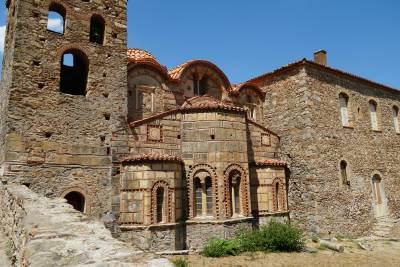 Tharena's ancient administration was slender, with powerful governors ruling with little but the relics they held and their ability to maintain relations with the local elites. The loss of the Crown of Horns, and the subsequent secession of the northern provinces, quickly made it clear that this model — in which a governor was a king in all but name — could not be maintained. The administration swelled from a loose military structure to a rigid hierarchy with a new class of scholar-bureaucrats. As a result, the Empire's strength is greatly vested in its many provincial cities with the new capital of Thysera in the province of Kholeis standing foremost amongst them. In many ways, the Tharena that was is no more — once a hegemony, the Empire is now inseperable from the culture of the lands over which it rules, and once all-powerful, the Emperor now relies on the support of the church, the twelve Great Houses which succeed from Kallia's companions, and the bureaucracy.
While wealthy, the Empire has never been without threat. The nomadic tribes to the west of Nanteia have long been both a potential source of wealth by trade and a threat to the province's security, needing much of the empire's military and infrastructure to hold them at bay. The alliance by marriage between the Empire and the Land of Endless Sky is thus of great importance to the Empire's interests in the modern day.
Governance
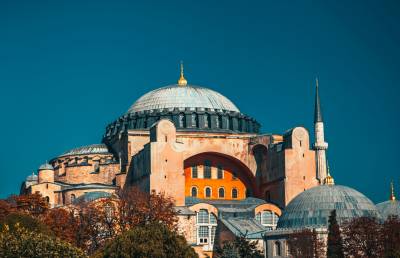 The government of the Southern Empire is built around the imperial court and a system of co-rule by a parent and child of the imperial line, with the senior ruling as Empress and the junior being titled Supreme Duke and sitting at the head of the Imperial Council. The bulk of actual power is held by this council, with a representative from each of the twelve Great Houses each leading one of the empire's ministries.
The empire is divided into four great provinces, each led by a Lord Captain. Each consists of many governates and subordinate prefectures. Each Lord Captain, Governor, or Prefect is selected exclusively from the Great Houses, though candidates are preferred on the basis of merit. Cadet branches fill the lower ranks, while the higher positions are often given to promising heirs of the houses.
Instead of holding administrative positions, members of the imperial house are granted military commands, most of which pertain in peacetime to the recruitment and upkeep of forces, requiring 'riding circuit' around the provinces to inspect their barracks and the readiness of the troops. As a result, the Imperial House holds a monopoly on military strength, though the Great Houses are all major stakeholders in the empire, all greatly disinclined to rock the boat.
Provincial nobles, or commoners who hope to become scholars, must sit examinations organised by the empire to earn the requisite qualifications for government office. The exams are held in four ranks: Universal, Provincial, Imperial, and Palace, with the latter two requiring the presence of the Imperial Family. Each rank of exams differs in who is permitted to access it, and what positions it qualifies a scholar to fill.
Society and Culture
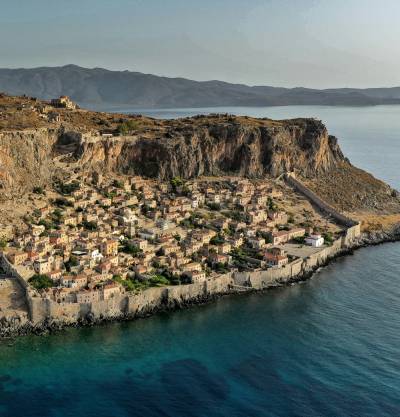 The Southern Empire regards itself as the only true successor state to the Tharenan Empire, and still bears that as its name. Culturally, it has become a strange blend of aristocratic and meritocratic in nature — the rule of the aristocracy is assured, but they are expected to surround themselves with people of merit and to cultivate their own education. The culture of the empire thus is one that greatly respects learning: Each governate is required to provide free education to the children of its capital and the greatest cities are home to remarkable universities and libraries open to all scholars.
The Great Houses are each a dominant pillar of the culture, with each running a different ministry and generally specialising towards that ministry's function. The Great Houses, too, are the primary institutions handling magic within the empire: Talented mages are often adopted into one of the vassal houses belonging to a Great House, where they might access the scholarly resources to bring their talent to fruition. The list below describes six of the twelve great houses and their ministries, with the other six left unspecified to allow players to customise a Great House during Character Creation.
| Great House | Surname | Ministry |
|---|---|---|
| Kallianais | Kallianos or Kalliani | The imperial household, with responsibility for war and the military. |
| Amatais | Amatos or Amati | Ministry of the Paths (Magic) |
| Gallianais | Gallianos or Galliani | Ministry of Development |
| Meraktontes | Meraktos or Merakti | Ministry of the External (Diplomacy) |
| Pantoriais | Pantoros or Pantori | Ministry of the Navy |
| Venais | Venos or Veni | Ministry of Rites |
| Vhaskontes | Vhaskos or Vhaski | Ministry of Secrets (Espionage) |
Culturally, the four provinces differ from one another greatly, yet rely on one another for the Empire to function as a whole.
| Province | Key Economy | Details |
|---|---|---|
| Kholeis | Wine and urban manufacturing | The site of the Imperial Capital of Thysera, and the home of the Great Houses. Comfortably the wealthiest province. |
| Helat | Manpower, mining and quarrying | Deeply connected to Kholeis, almost serving as its hinterland. Strong cultural influence from the northern province of Surimutum. |
| Alasset | Agriculture and education | The river Alas runs south-to-north, and floods regularly giving very fertile soil. Was an independent kingdom prior to Tharenan annexation, still retains much of that culture. |
| Nanteia | Trade, military fortification | Expensive to protect, but invaluable in controlling trade from the west. More culturally disconnected from the three eastern provinces, and much of the present population descends from settled steppe folk. |
Characters from Southern Empire
Starting Point: The most important considerations for a character from the Southern Empire are their class and family. From the imperial dynasty at the top to the families of the provincial nobility and even down to the peasantry, one's place within a family is highly valued and their connections to other family are often the way through which status is earned — a minor family of the provincial nobility might rise to higher prominence by becoming a vassal house in the service of one of the Great Houses. Family in the Southern Empire need not always be by blood — Wildborn of note are often adopted into a family, and useful individuals might rise above their family's station by adoption into a higher house.
In the world: Characters from the Southern Empire are often conflicted between the traditions that have bought them this far and the innovation that such a scholarly culture readily breeds. Just as the Empire must balance the two, so much each of its people do the same in their own lives. They tend to heavily value the Empire's culture of meritocracy, with even individuals of the highest classes seeing themselves primarily as servants of the state.
While the Chuch of the Guardian is the state church in the Southern Empire and features heavily within the rites and rituals of the court and its administration, the empire remains generally tolerant of minority faiths.
Character Options and Suggestions: All species except Slimefolk are represented across the empire. The imperial family, great houses, and their cadet branches consist entirely of Dragonblooded, though they become progressively fewer in number with lower rank.
A character from the Southern Empire might be an independent adventurer, or they might have chosen a life in service to the state. The Empire maintains a large standing army, of which a substantial portion is being bought to the Labyrinth. You might be a noble sent to the expedition by their family, a scholar granted a position as an officer within the expedition force, or a marine serving on one of the empire's great fleet of ships. Otherwise, characters might be instructors from one of the Empire's universities, or even merely a peasant conscripted into service and chanced to be assigned to this mission.
Magic is widely used across the Southern Empire and is studied at all its institutes of education, with the Empire historically preferring the benefits of the Paths of the Earth and Heavens in maintaining armies on the march far from their own homes. Mages are usually adopted into a vassal house of one of the Great Houses, where they are put to work in service of the empire.
| Status | ||
|---|---|---|
| Rank | Title | Position in Society |
| 1 | Peasants | Owning nothing and without title, the peasantry live their lives in hard labour, and receive little by way of reward. The best hope for progression is likely conscription into the army, which provides one with the opportunity to study for imperial examinations. |
| 2 | Burghers | Residents of one of the empire's many cities or towns. Some are well-paid artisans, while many more work in semi-skilled labour in a manufactory. Untitled, but posess the hope of rising higher through the examinations. |
| 3 | Scholars | While scholarship is a virtue necessary to all nobles, the empire is welcoming of wisdom even from those who started amongst the masses. The primary means by which a peasant or burgher may hope to advance. Most common-born scholars end up working in the administrations of prefectures or governates, though some will advance all the way to the capital. |
| 4 | Vassal Houses and Provincial Nobility | The backbone of the empire. The great mass of the lower aristocracy, governing the rank-and-file of the empire by their network of connections and influence. The heads of these houses are usually titled Viscount or Lord, respectively. |
| 5 | Minor Princes and the Great Houses | Members of the 12 Great Houses and the lesser branches of the House of Kallia. Eligible to serve as imperial governors, or hold substantive office in the capital. Also includes the cadet branches of the Great Houses. May be titled Prince, for non-linear heirs of the imperial house, or Count for the heads of cadet branches. |
| 6 | Imperial Council and Dynastic Princes | (Not available at game start) The beating heart of the empire. Collectively responsible for wielding total authority over the empire's governance and its military. May be titled Grand Duke, for the heirs of the imperial line, Duke for the heads of the Great Houses, or Vice-Duke for their representatives upon the council. |
| 7 | Emperor and Supreme Duke | (Not available at game start) The senior and junior heirs of Kallia's immortal legacy. Wield absolute power — though with absolute dependence on their myriad subordinates. |
Naming Conventions
Names in the Southern Empire consist of a given name and a family name, and are traditionally gendered male and female, though a non-binary form is used:
| Gender | Given Name Suffix | Family Name Suffix |
|---|---|---|
| Male | -on | -os |
| Female | -ina | -i |
| Neither | -to | (No suffix) |
Both given and family names are generally polysyllabic with 2 or 3 syllables being most common. In general, the names most resemble Greek nomenclature:
Given Names: Amalina, Ephrosia, Kouron, Meleion, Vivetis. Family Names: Karelos/Kareli, Ouros/Ouri, Thenos/Theni.
Clothing Styles
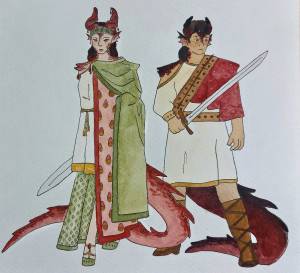 The clothing style of the Southern Empire greatly resembles that of the real-life Byzantine empire. Standard dress consists of many layers of coloured fabric, often including tunics, long, flowing dresses, cloaks, or mantles.
Characters of higher status wear more intricate patterns on the fabric, or simply more layers of thinner fabric instead of fewer layers of harder-wearing fabric. Jewellery is common, especially amongst the upper classes, with the Dragonblooded aristocracy commonly wearing jewelled chains around their horns.
Characters holding a position within the state might have a garment, or garments, that are symbols of that office. These are not worn all the time, but are generally simple in design and are most likely to be coloured in red, purple, or gold.
NPCs
Notable NPCs:
| Name | Pronouns | Species | Status Rank | Costume | Description |
|---|---|---|---|---|---|
| Grand Duchess Amalina Kalliani | she/her | Dragonblooded | 6 | Tiara | This particularly petite princess is the heir expectant to imperial power, though few would have thought her a likely successor even a few years ago. Even through the imperial family's secrecy, many a story of Amalina's magical power going uncontrolled and causing harm became the gossip of the capital, while the Princess' health seemed on an interminable decline to the point it seemed she would never again leave her bed. Her recovery — and the control she is now able to excercise over her magic — is nothing short of miraculous. |
| Duchess Irina Vhaski | she/her | Dragonblooded | 6 | Email only | A young woman who has recently taken over the headship of House Vhaskontes and the Ministry of Secrets, after her father's untimely death. Seems more interested in partying and luxury than in effective spycraft. |
| Supreme Duke Meleion Kallianos | he/him | Dragonblooded | 7 | Email only | The junior emperor, Meleion took the primary responsibility for the organisation of the Southern Empire's expedition. |
| Empress Ephrosia Kalliani | she/her | Dragonblooded | 7 | Email only | The senior empress, Ephrosia is relatively withdrawn, confiding in only her close family and participating in the rituals of court where she must. |